




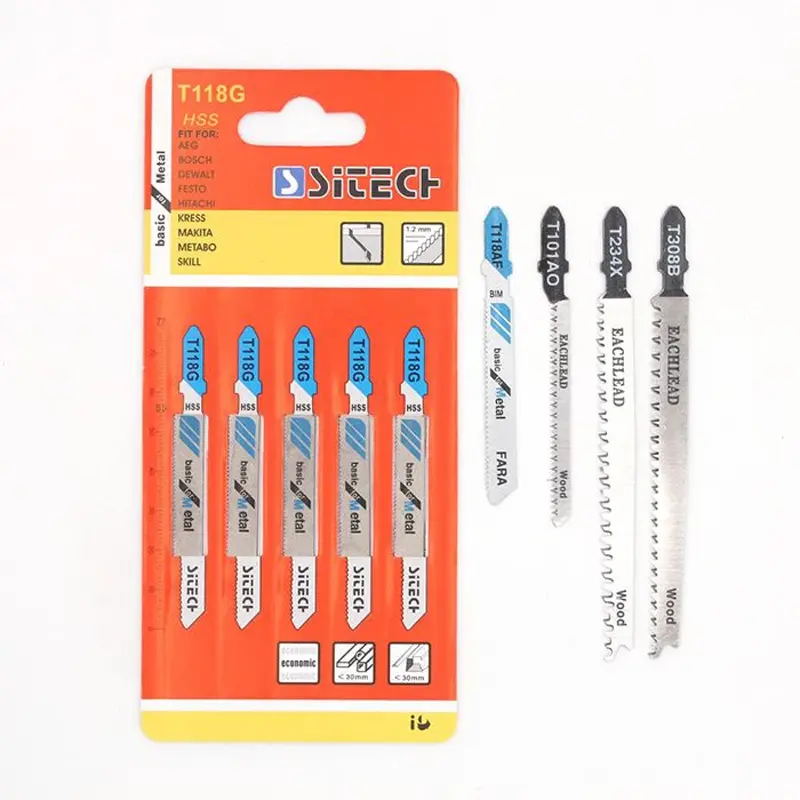
When you need to cut sheet metal, pipes, or aluminum, you might ask: Are there jigsaw blades specifically for cutting metal? The answer is yes. Using the right metal jig saw blade can transform your jigsaw into a powerful metal cutter, easily handling light to medium-weight cutting tasks, often without the need for special tools. Choosing the right blade is crucial for safety, extending tool life, and improving cut quality woodworking saw blades dull quickly, causing overheating and potential hazards. This article will explain how to effectively select and use metal jig saw blades.
Understanding the Key Differences: Metal Blades vs. Wood Blades
1.Material and Hardness: They are made from high-speed steel (HSS) or bi-metal construction. Bi-metal blades are the most popular and durable for general use, featuring a flexible high-carbon steel body welded to a hardened HSS cutting edge. This combination allows them to withstand the hardness of metal without shattering.
2.Tooth Design (TPI – Teeth Per Inch): This is the most critical factor. Metal jig saw blades have a very high TPI (tooth count).
- For thin sheet metal (up to 18 gauge): Use blades with 21-24 TPI or higher. More teeth create a smoother, more controlled cut.
- For general-purpose metal (1/8″ to 1/4″ thick): Blades in the 14-18 TPI range are ideal. This includes aluminum, mild steel, and pipes.
- For thicker or harder metals: Specialized blades with tungsten carbide grit (abrasive) edges are
3.Tooth Geometry: The teeth are smaller and often wavy-set. This design helps clear metal chips from the kerf (the cut line) and reduces vibration, which is crucial for a smooth cut and preventing blade fatigue.
How to Choose the Right Metal Blade for Your Job:
1.Cutting Thin Sheet Metal (Ductwork, Signage):
Choose: A high TPI (21-24+) bi-metal blade.
Tip: Clamp the sheet between two thin sheets of scrap wood. This technique, called “sandwiching,” dramatically reduces vibration, prevents the thin metal from tearing, and results in a much cleaner edge.
2.Cutting Aluminum Profiles or Pipes:
Choose: A 14-18 TPI bi-metal blade. Ensure the blade is rated for “non-ferrous” metals.
Tip: Use a cutting fluid or even simple WD-40 as a lubricant. This keeps the blade cool, prevents aluminum from gumming up the teeth, and extends blade life significantly.
3.Cutting Mild Steel:
Choose: A robust 14-18 TPI bi-metal blade.
Tip: Go slow. Let the blade’s teeth do the work without forcing the saw. Applying too much pressure will overheat and dull the blade quickly.
4.Cutting Stainless Steel or Harder Alloys:
Choose: A specialized blade, often with a tungsten carbide grit edge.
Important: These are abrasive blades and wear down differently. They require even slower feed speeds and are generally for specific, occasional tasks.
Essential Safety and Technique Tips for Cutting Metal
1.Secure Your Workpiece: Metal vibrates intensely. Always clamp it firmly to your workbench. Never try to hold it by hand.
2.Wear Full PPE: Safety glasses are mandatory. Gloves protect against sharp edges, and hearing protection is recommended due to the high-pitched noise.
3.Use a Low Speed Setting: Start your jigsaw at its lowest speed setting. High speed generates excessive heat, which ruins the blade’s temper and can weld chips to the teeth.
4.Let the Blade Work: Apply gentle, consistent forward pressure. Do not force or bend the blade. If you see smoke or the blade turns blue, you’re going too fast or not using lubricant.
5.Plan for Support: As you near the end of a cut, support the cutoff piece so it doesn’t bend and snap the blade prematurely.
Final Recommendation
Specialized metal jig saw blades for cutting metal are available. For most common uses, a bi-metal blade with 14-18 TPI is the simplest and most effective all-around choice. Remember to cut slowly, use lubricant on aluminum, and always clamp your workpiece securely. Keeping a small set of quality bi-metal blades in different TPIs prepares you for various metal-cutting tasks. With the right blade and technique, your jigsaw becomes a far more versatile and essential workshop tool.
Post time: Dec-23-2025